Mamta Kulkarni Xxx Nude Fake Photo Gallery Exclusive Now
If you are researching 1990s fashion history, you must separate authentic styling from digital fakes.
This spiritual avatar, however, was not accepted by all. In fact, it became the center of a major controversy that perfectly fits the “fake gallery” theme. Rishi Ajay Das, the founder of the Ujjain-based Kinnar Akhara, publicly condemned Mamta Kulkarni and another spiritual leader, accusing them of donning “fake saffron robes” and calling them “frauds.” He claimed that their spiritual journey was nothing but a publicity stunt and that they were wearing the robes of ascetics without truly renouncing the world. This accusation of wearing a “fake” spiritual uniform is the most literal example of a fake fashion gallery—dressing up in a costume of spirituality for public consumption. mamta kulkarni xxx nude fake photo gallery exclusive
On the silver screen, Mamta Kulkarni redefined the traditional Indian look with a sultry twist. She was a frequent wearer of the diaphanous chiffon saree, often in vibrant monochromatic shades like scarlet, lemon yellow, or midnight black. These were usually paired with sleeveless or halter-neck blouses, a style choice that was considered quite daring for the time. If you are researching 1990s fashion history, you
Because Kulkarni’s career was marked by highly publicized controversies—such as her groundbreaking 1993 Stardust magazine cover—the term "fake" is sometimes used by search algorithms to differentiate standard film stills from highly sensationalized, misattributed, or doctored media floating around the web. Rishi Ajay Das, the founder of the Ujjain-based
: She frequently wore matching two-piece outfits, such as black crop tops with netted skirts, which have returned as modern style staples.


Call us (08:30-16:00 UK)
01803 865913International
+44 1803 865913Need Help?
Help pages
Wildlife Survey & Monitoring
- Aquatic Survey & Monitoring
- Professional Hand & Kick Nets
- Water Testing
- Waders & Aquatic Safety
- Pond Dipping Equipment
- Plant Survey
- Tree Survey Equipment
- Quadrats & Point Frames
- Botanical Presses & Accessories
- Marking Tape & Marking Flags
- Amphibian & Reptile Survey
- Amphibian Survey & Monitoring
- Reptile Survey & Monitoring
- Scales, Balances & Holding Bags
Practical Conservation Equipment
- Bird Boxes
- Woodcrete & WoodStone Bird Boxes
- Bird Boxes for Walls & Fences
- Integrated Bird Boxes
- Wooden Bird Boxes
- Bat Boxes
- Woodcrete & WoodStone Bat Boxes
- Bat Boxes for External Walls
- Integrated Bat Boxes
- Wooden Bat Boxes
- Other Nest Boxes, Habitats & Feeders
- Insect Boxes
- Mammal Boxes
- Frog & Toad Habitats
- Feeders & Water Baths
- Wildlife Management
- Badger Gates & Fencing
- Invasive Species Control
- Amphibian & Reptile Fencing
- Predator Deterrents & Repellents
Field Guides & Natural History
Academic & Professional Books
British Wildlife

British Wildlife is the leading natural history magazine in the UK, providing essential reading for both enthusiast and professional naturalists and wildlife conservationists. Published eight times a year, British Wildlife bridges the gap between popular writing and scientific literature through a combination of long-form articles, regular columns and reports, book reviews and letters.
Conservation Land Management
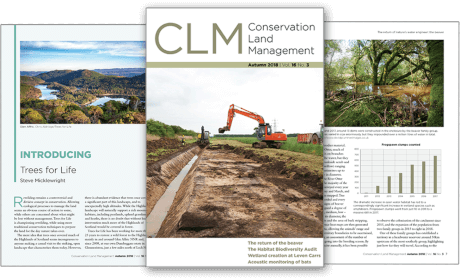
Conservation Land Management (CLM) is a quarterly magazine that is widely regarded as essential reading for all who are involved in land management for nature conservation, across the British Isles. CLM includes long-form articles, events listings, publication reviews, new product information and updates, reports of conferences and letters.